.png )
By Admin
Air conditioners have become an essential part of modern homes, ensuring comfort even during scorching summers. However, to keep your AC running efficiently, regular maintenance is a must. One of the most crucial aspects of AC maintenance is cleaning your AC filters. Dirty filters can reduce cooling efficiency, increase energy consumption, and even impact indoor air quality.
In this guide, we will take you through the step-by-step process of how to clean your AC filters properly, why it is important, and some expert tips to enhance your AC’s performance.
Over time, air filters accumulate dust, pollen, pet hair, and other airborne particles. When clogged, they restrict airflow, making the AC work harder to cool the room. Here’s why cleaning your AC filters should be a part of your routine maintenance:
Improves Cooling Efficiency: A clean filter ensures proper airflow, allowing the AC to cool faster.
Reduces Energy Consumption: When your AC runs efficiently, it consumes less electricity, reducing your energy bills.
Enhances Indoor Air Quality: Dirty filters can circulate dust and allergens, leading to respiratory issues.
Extends AC Lifespan: Regular maintenance prevents strain on the AC unit, reducing the risk of breakdowns.
Prevents Unpleasant Odors: Accumulated dirt and mold can lead to a musty smell in your home.
The frequency of cleaning your AC filters depends on various factors, including usage and environmental conditions. Here’s a general guideline:
Every 2 Weeks: If you live in a dusty area or use the AC daily.
Once a Month: For moderate usage in urban settings.
Every 3 Months: If you use your AC occasionally.
More Frequently: If you have pets, allergies, or live near construction sites.
Checking your AC filters at least once a month is a good habit to ensure they remain clean and functional.

Before you begin, always switch off the AC from the main power source. This ensures safety and prevents electrical hazards.
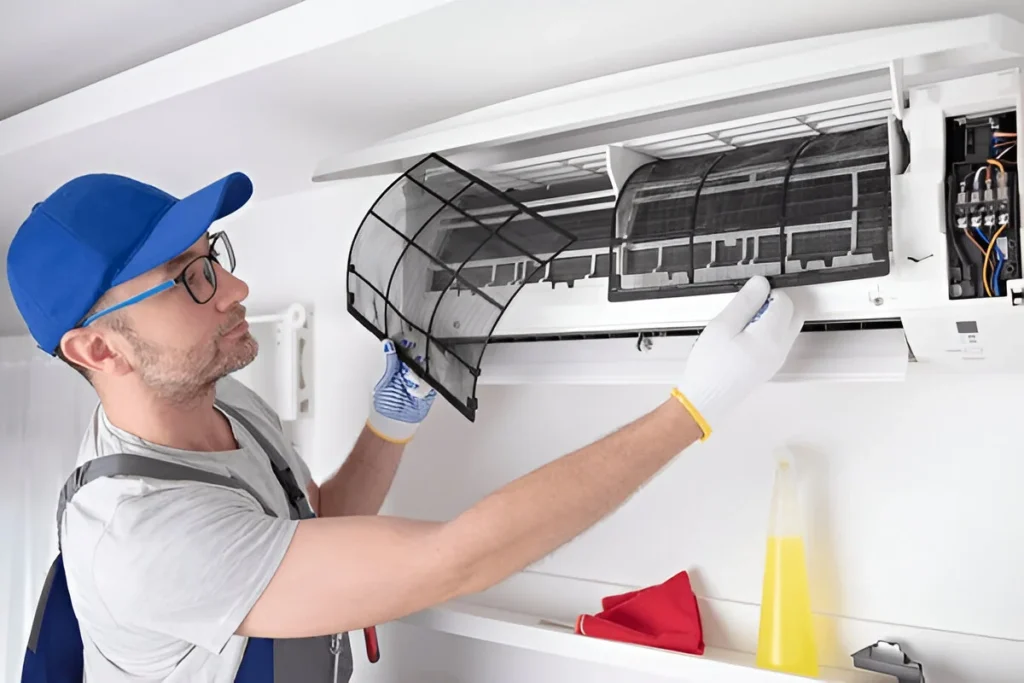
In split ACs, filters are usually behind the front panel.
In window ACs, they are accessible by removing the front grille.
In central ACs, filters are located in the return air duct.
Refer to your AC’s manual if you are unsure where the filter is located.
Gently take out the filter without shaking it too much to avoid releasing dust into the air.
If it has light dust, simple cleaning will suffice.
If it is heavily clogged, a deeper wash is needed.
If it has damage or tears, consider replacing it.
For lightly soiled filters:
Use a vacuum cleaner to remove dust.
A soft brush can help dislodge stuck particles.
For deeper cleaning:
Rinse the filter under running lukewarm water.
Use a mild detergent and a soft brush if needed.
Avoid using high-pressure water, as it can damage the filter.
Shake off excess water.
Let it air-dry in a shaded area. Avoid direct sunlight as it can cause warping.
Once dry, place the filter back in its original position, ensuring it fits securely.
Turn on the AC and observe if there is an improvement in cooling efficiency and airflow.
Sometimes, even with regular cleaning, filters may need a replacement. Watch out for these signs:
Reduced Cooling Efficiency: If your AC isn’t cooling effectively.
Increased Electricity Bills: A clogged filter makes the AC work harder, using more power.
Strange Odors: A musty or burning smell may indicate a dirty filter.
Excessive Dust in Your Home: Dirty filters fail to trap dust, circulating it indoors.
Visible Damage or Mold: If you notice mold growth, it’s best to replace the filter.
Use HEPA or Electrostatic Filters: These are better at trapping dust and allergens.
Consider Smart AC Filters: Some modern ACs come with filters that notify you when cleaning is due.
Keep Your Room Clean: Reducing indoor dust levels helps keep filters cleaner for longer.
Check the Manufacturer’s Guide: Different ACs have different filter maintenance needs.

Yes, you can use mild soap and lukewarm water. Avoid harsh chemicals that can damage the filter.
If your AC is not cooling properly, has weak airflow, or your energy bills have increased, your filter is likely clogged.
No, disposable filters are designed for one-time use. Cleaning them can reduce their effectiveness.
A clogged filter can reduce cooling efficiency, increase energy bills, and even lead to system failure.
If your filter is heavily clogged or part of a larger AC issue, professional servicing is recommended.